The Constitution of 1791
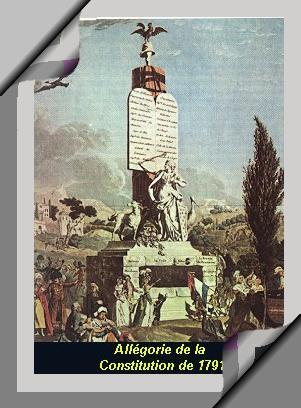
In June of 1789, the National Assembly took a collective oath to draft a new civil constitution for France; they completed this task in 1791. The new constitution declared France to be a constitutional monarchy. Within this new government, all legislative powers would fall to a single Legislative Assembly, which alone had the power to declare war and raise taxes.
The Legislative Assembly would be made up of representatives elected by Electors, who themselves were elected by "active" citizens (an active citizen was a male citizen who paid annual taxes equal to the local wages paid for three days of labor). This meant that only half the citizens of France could vote and, in a country of 25 million people or so, only fifty thousand qualified to serve as either electors or members of the Legislative Assembly.
The monarch was allowed very few powers. He could temporarily stall legislation through a suspense veto, but he could not veto any legislation permanently. The control of the army was taken out of his hands, and he had no authority over local governments. In addition, he could send no representatives to serve in the Legislative Assembly.