The Fall of The Bastille
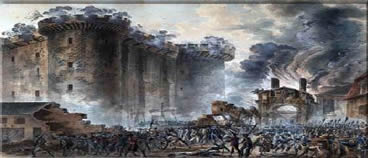
The early days of the Revolution were punctuated by three significant popular uprisings: the taking of the Bastille on July 14, the "Great Fear" of July and August, and the march on Versailles Palace on October 5. These were all dramatic and transformative events; in every case, they brought home the seriousness of the endeavor whenever it had become stalled and consequently restarted the process.
Events were happening quickly and few people could believe that the monarch or the aristocracy would allow the process to continue. In addition, the unrest had resulted in dire shortages of bread; most French believed that this was a deliberate attempt by the aristocracy to starve out the Revolution. By June, most everyone was convinced that the king was poised on retaking the government by force.
Fearful of both the king and the poor, who were growing more violent with each passing day out of frustration and desperation, the electors of Paris, that is, the members of the Third Estate who could vote in the National Assembly took matters into their own hands. These electors were modest people: trades people, craftsmen, and small businessmen. They would eventually be called sans-culottes, because they didn't wear the breeches (culottes ) of the upper class. They banded together and formed a new municipal government of Paris; on July 14, the marched to the Bastille. This structure served as both a prison and a warehouse for firearms and ammunition.
When the crowd arrived at the Bastille, they demanded arms and ammunition from the Governor of the Bastille. At first he refused, but as the mob grew larger, he ordered his soldiers to fire on the crowd. Ninety-eight were killed and the crowd, fierce for revenge, stormed the fortress, released the prisoners (five criminals and two madmen), decapitated the Governor, and distributed arms to the citizenry.